
Hermes: the agent with a front door
A messaging-native agent you can talk to from the CLI or the dashboard, whose channels have a pairing wall: strangers get held at the door until you approve them.
Most agent frameworks treat the outside world as an afterthought. Hermes treats it as the whole point, and then puts a lock on it.
Hermes is one of the frameworks you can deploy on Maritime with one command. Two things make it worth writing about: you can talk to it the same way from the terminal or the dashboard, and the agent ships with a consent model for who is allowed to talk to it.
Here's the whole thing end to end, recorded live: deploy a Hermes agent from a template, wait for it to come online, open its dashboard, and get a first reply.
Two ways to talk to it
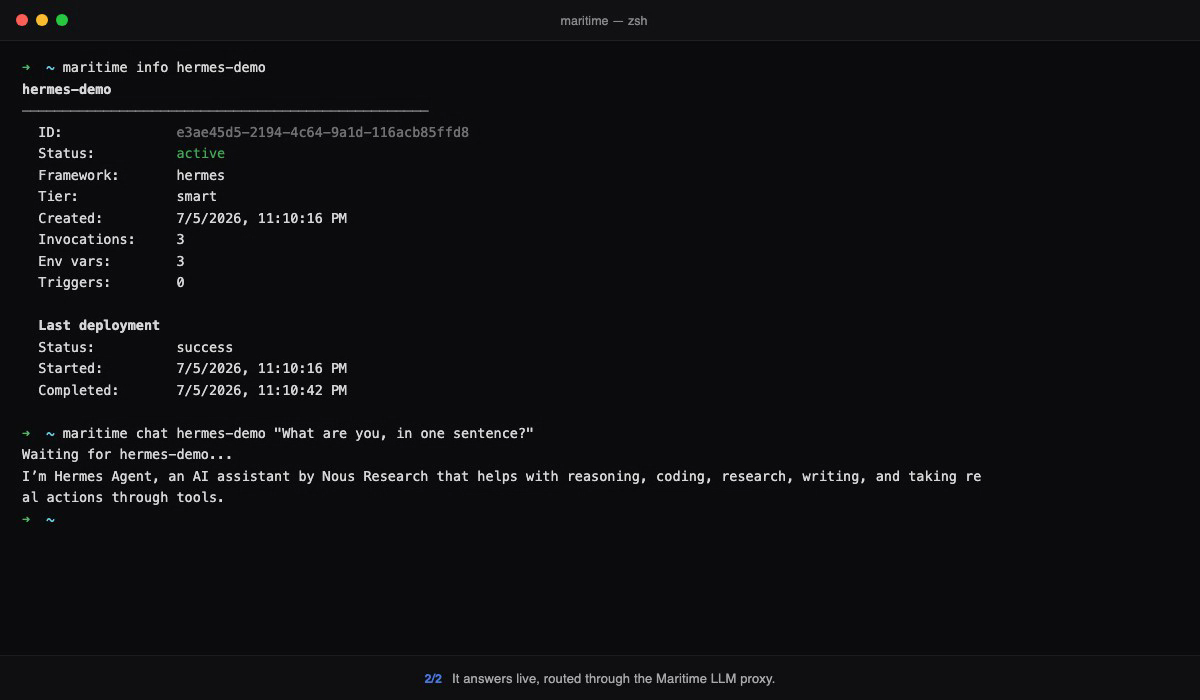
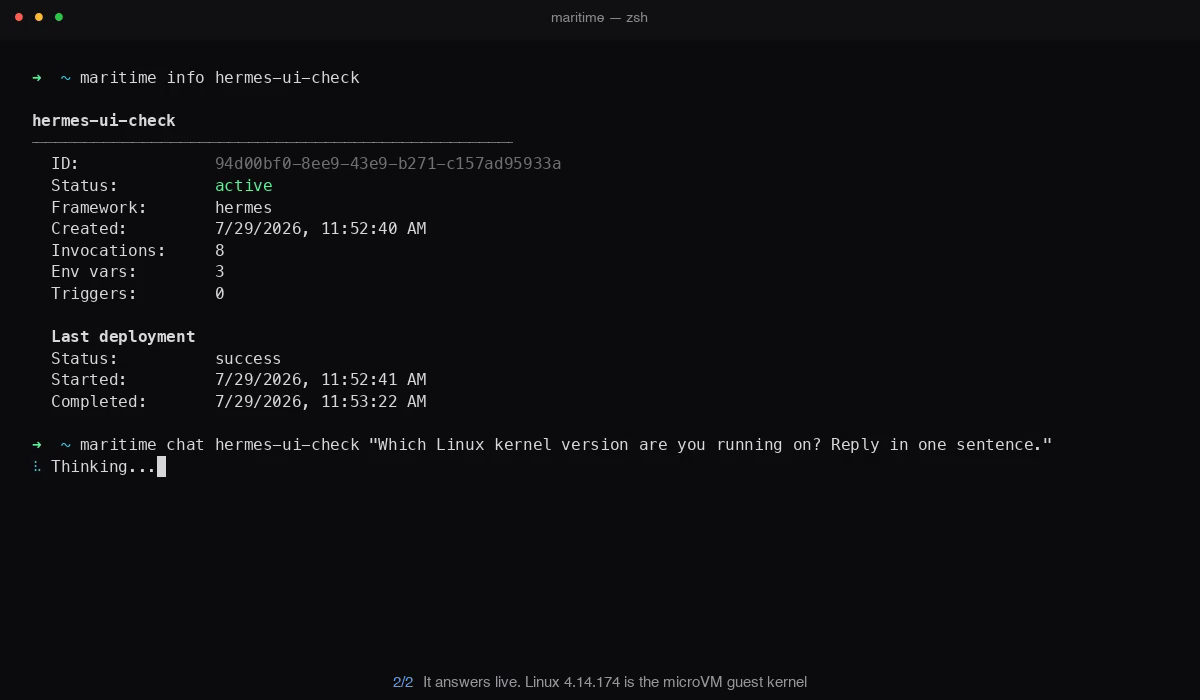
Ask a question from the CLI and the agent answers, routed through the Maritime LLM proxy:
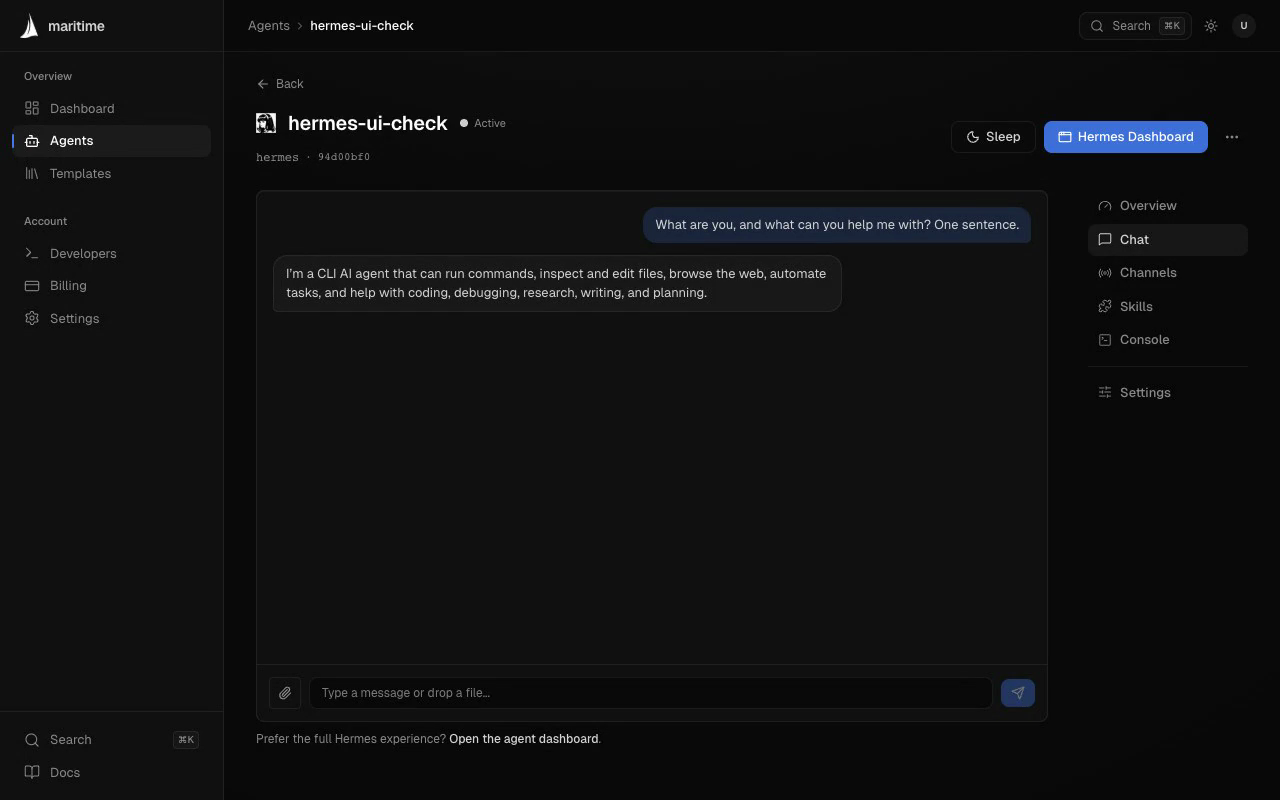
Or open the agent in the dashboard, go to the Chat tab, and ask there. Same agent, same answer, no terminal required:
The pairing wall
Give an agent an email address and a phone number, and you have created a new problem: anyone on the internet can now put words in front of your agent. For an LLM-driven system, inbound text from strangers is not spam, it is attack surface. Prompt injection walks in through the front door.
Hermes answers with a pairing wall. When an unknown contact messages the agent on a connected channel, the agent does not process the message. It replies with a short "I don't recognize you yet" and holds the conversation. The owner sees the pairing request in the dashboard and approves or ignores it. Approved contacts persist in the agent's pairing store on its volume, so the decision survives sleeps, wakes, and redeploys.
In the dashboard it looks like this: a stranger who messages the agent on any connected channel is held until you approve them, either by the one-time code they were given or by pre-allowing their address outright.
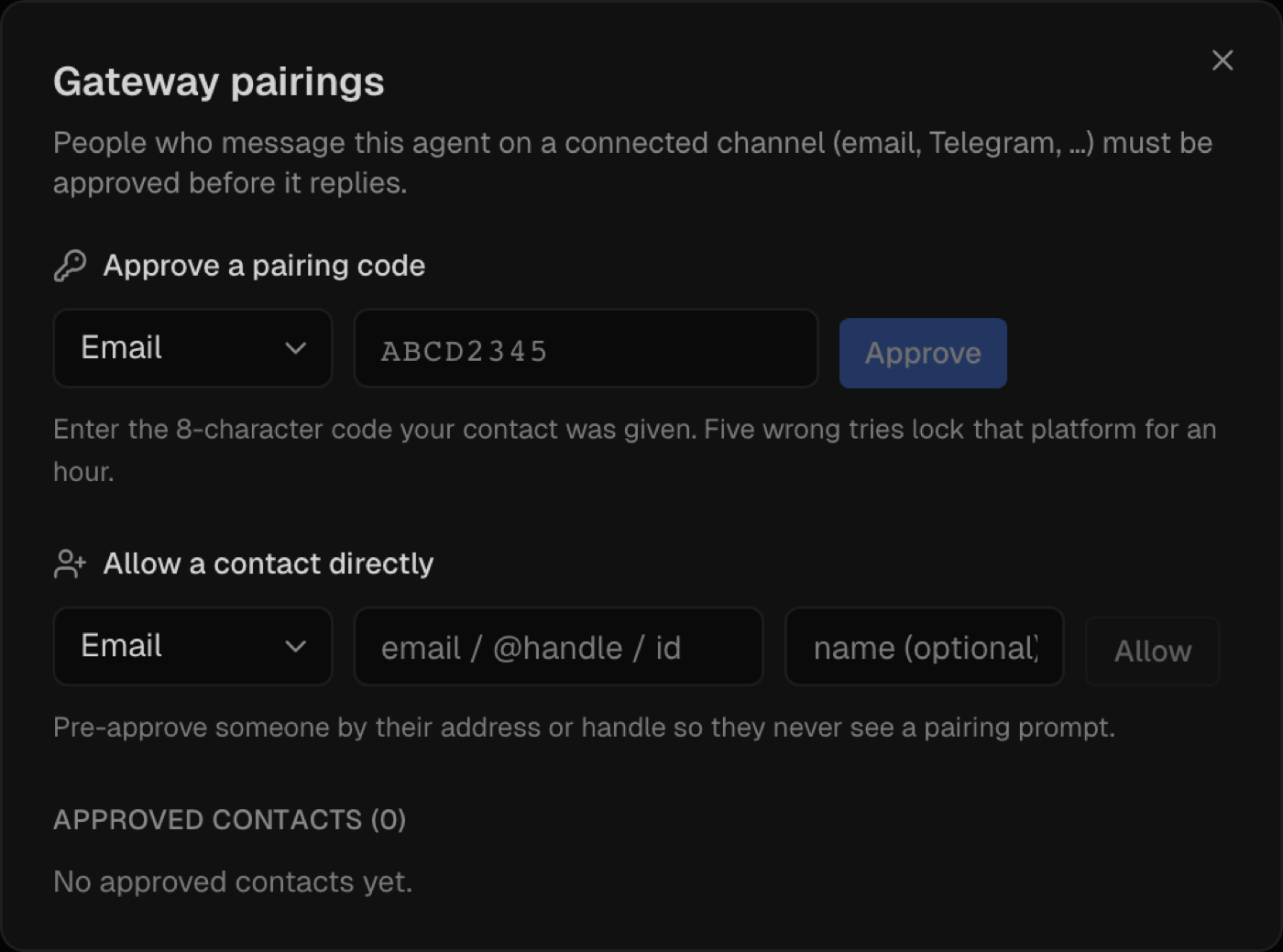
You manage it all from the dashboard: open the agent, go to Channels, and approve or pre-allow contacts per channel.
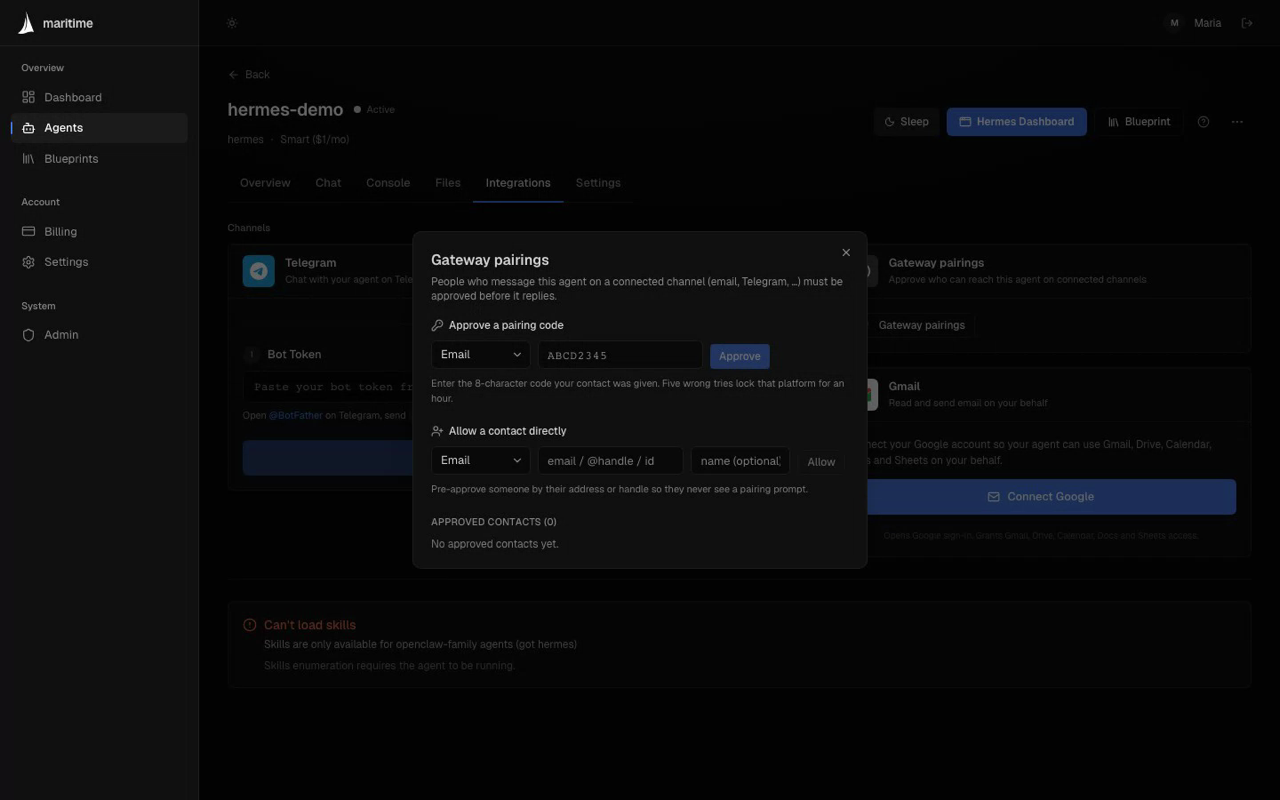
The security property is worth stating precisely: the agent's model never reads a stranger's message. Untrusted input is quarantined before it reaches the context window, which is the only place a defense like this can actually live. Filtering after the model has read the text is advice; filtering before is a boundary.
Talking to it directly
The channels are the point, but you don't need email to talk to a Hermes agent. Hermes has no HTTP chat endpoint of its own, so Maritime invokes it locally (hermes chat -q); ask a question from the CLI or the dashboard Chat tab and you get a real reply, running on a serverless Firecracker microVM.
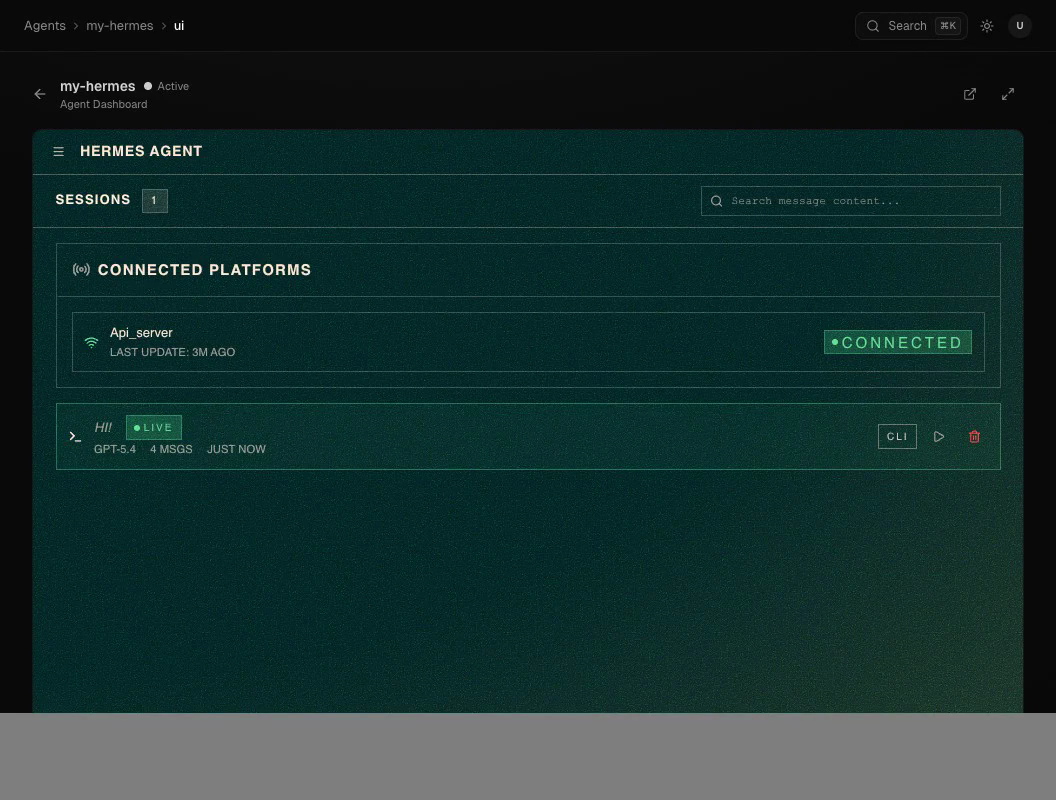
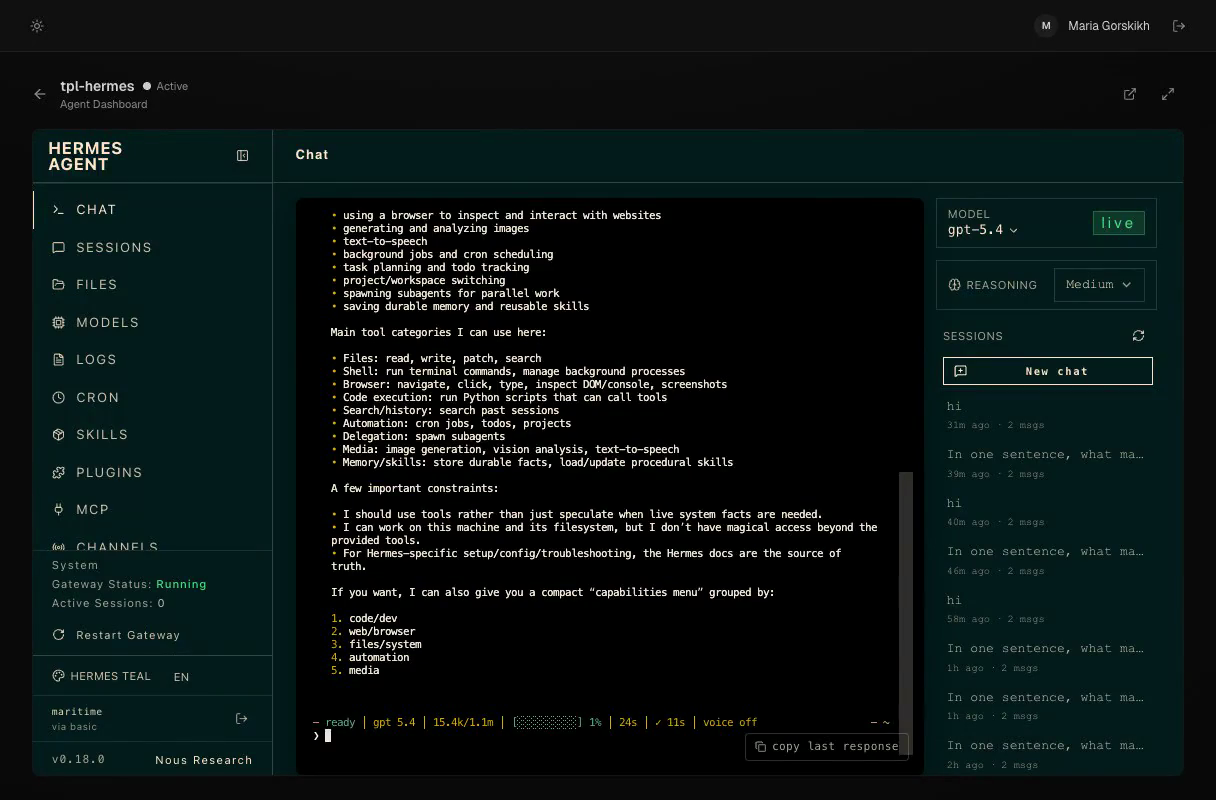
And for the full experience there's the native Hermes dashboard itself: sessions, files, models, logs, cron, skills, plugins, MCP, channels, with the real hermes chat TUI embedded in the browser. Click Hermes Dashboard on the agent page and Maritime proxies it straight through, auth already handled. No login screen, just the terminal:
Channels that survive sleep
Hermes agents on Maritime run under the same sleep/wake lifecycle as everything else. Channel credentials live on the agent's persistent volume, and on our Firecracker hosts the gateway is started automatically on deploy and on every wake. Practically: your agent can be asleep, costing nothing, and still be reachable. The next inbound email wakes it, the pairing wall does its check, and the conversation continues where it left off.
An agent with a real identity
The hermes_identity template goes one step further and provisions the agent an identity of its own: a real email address and, optionally, a phone number. Combined with the pairing wall, that gives you something genuinely useful: an agent that is reachable from the outside world by default and ignores the outside world by default. Capability and consent, shipped together.
One honest caveat: real phone numbers and mailboxes are a limited resource, and we provision them in small batches. The current batch is fully allocated, so the identity templates are hidden from the template list until more capacity opens up. The plain Hermes template below is unaffected, and everything in this post about pairing and channels applies to it today.
maritime create my-hermes --template hermes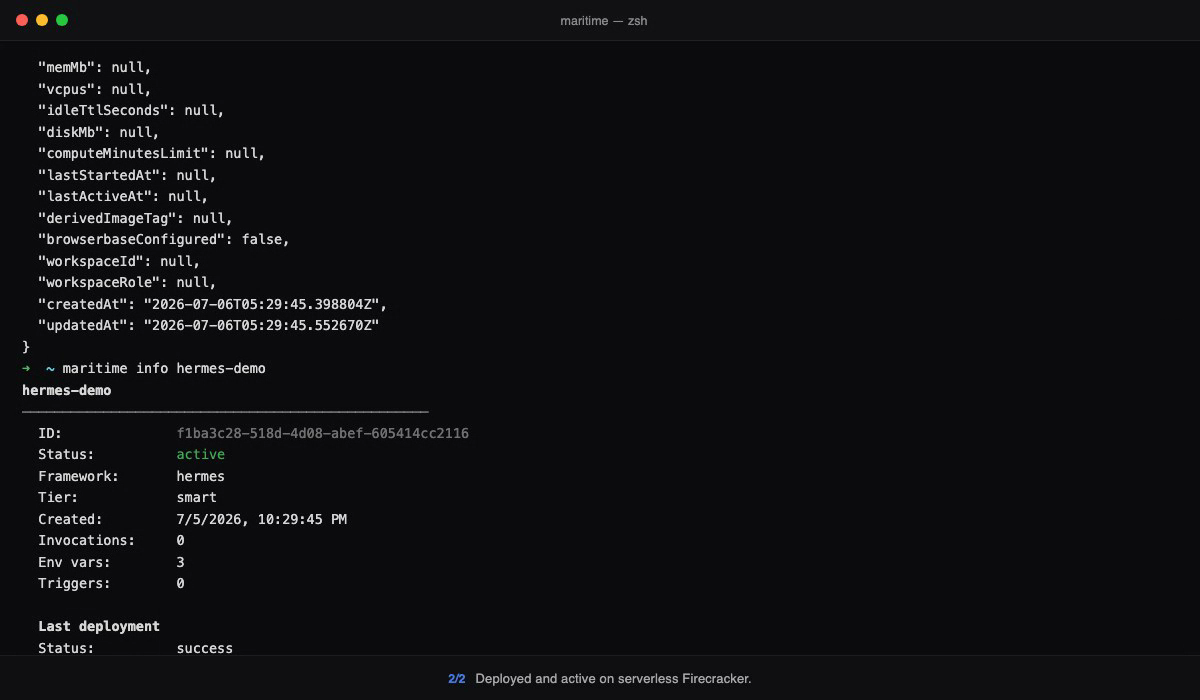
Why this matters
The industry keeps asking how to make agents more capable. The better question, once an agent has an inbox, is how to make it appropriately deaf. Hermes is the cleanest answer we have shipped: every conversation begins with the owner saying yes.